A good prune is quiet work. Deadwood comes out, the long heavy limbs over the roof lose some weight, the crown gets air and light back, and afterward the tree looks like itself, only better. A bad prune is loud: hat-racked maples, topped silver maples pushing weak shoots off every stub. We do the first kind.
What a prune actually fixes
- Limbs on the roof, in the gutters, or rubbing siding get cut back to clear the house properly.
- Deadwood through the crown, the stuff that ends up on your lawn after every wind, comes out before it comes down on its own.
- Long, overextended limbs get shortened so the next ice storm has less to grab.
- Crossing and rubbing branches get resolved before they carve wounds into each other.
- Low growth over walks, drives, and sight lines comes up to a height you can live with.
How we cut
Every cut lands just outside the branch collar, the swollen ring where limb meets trunk, because that's the tissue that closes the wound. We don't leave stubs and we don't cut flush. And we don't top trees. Topping is the fastest way to turn a strong tree into a weak one: the regrowth is fast, badly attached, and worse than what was removed. If someone quotes you a topping job, keep your money.
When to prune
Dead limbs: anytime, the sooner the better. Structural work on most species: late fall through early spring, while the tree is dormant and the crown is easy to read. Oaks specifically get pruned in the cold months to keep oak wilt out of the neighborhood. If a limb is threatening something today, the calendar loses; we come now.
What moves the price
Crown size, how much has to move, and what the limbs hang over. A maple that needs deadwood picked out is one number; the same maple needing weight off three leaders above a garage is another. Either way the number arrives in writing after a free look, and it doesn't change. Cleanup is part of the job: limbs chipped and hauled, sawdust raked, gutters cleared of what we dropped.
How much comes off
Restraint is most of the skill. A tree feeds itself through its leaves, and taking too much live crown in one season puts it into shock: it throws water sprouts everywhere, bark that used to be shaded scalds in the sun, and the problem you were fixing gets worse. We take what the tree needs to lose and no more. When a big maple needs a lot of weight off, the right answer is sometimes two lighter prunes a couple of years apart instead of one heavy one.
The other bad prune, after topping, is stripping the inside of the tree and leaving a tuft of leaves at the end of every limb. It looks clean from the ground for a month. Then the limbs, with all their weight now out at the tips, start breaking in wind they used to shrug off. Interior growth stays unless it's dead, rubbing, or in the way.
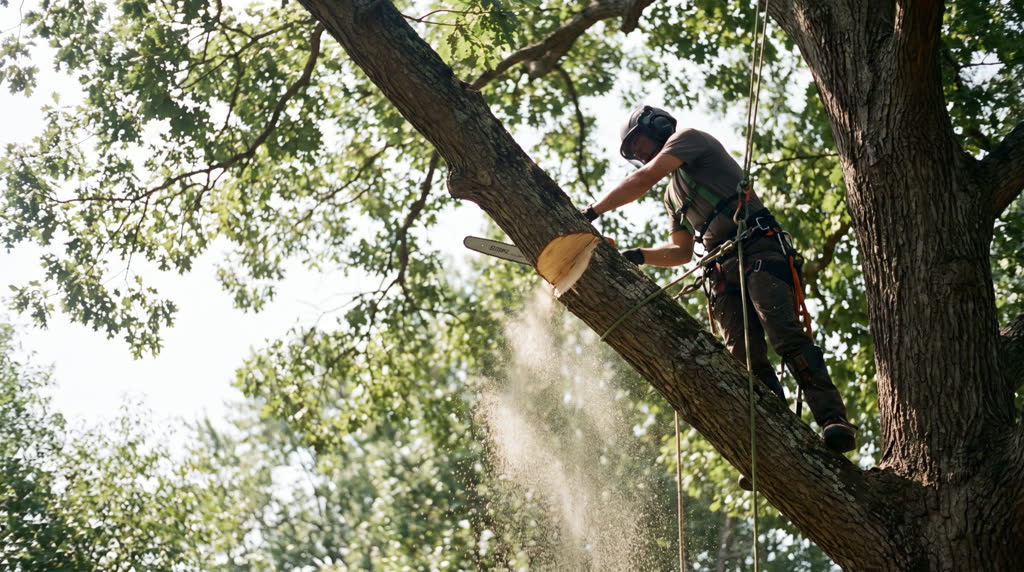
On the day, the climber goes up with a handsaw more than a chainsaw, because pruning is a lot of small cuts and few big ones. Brush goes to the chipper as it comes down, so the lawn never disappears under a pile. You don't need to be home, but it helps to be there at the start: show us the window you want light in, the limb that drops on your car, the bird feeder to work around. Ten minutes of pointing gets you the prune you actually wanted.
Ask at the look what the tree will need next. A well-pruned oak or maple is usually good for years. A silver maple or a willow over a roof wants a lighter visit more often. We'll say which you have, and it won't be next spring just to fill a calendar.
Want a number? The look is free, the estimate is written, and the estimate is the price. Request a free estimate or call (716) 601-8275.